
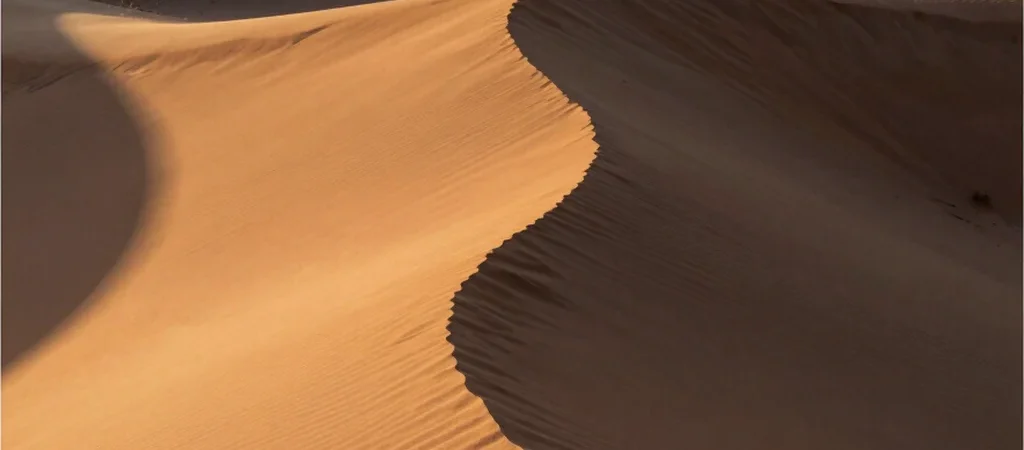
Standing amidst sweeping sand dunes as evening approaches reveals a landscape in constant motion. Fine grains of sand sweep across sharp dune crests, sculpting fluid geometric lines across the horizon. Photographing these environments presents unique technical hurdles, from protecting sensitive optics to mastering high-contrast exposures.
Working with Side Light and Crest Shadows
Low angle golden-hour light is essential when shooting desert topographies. As the sun drops toward the horizon, side lighting carved into the sand crests accentuates ripples and creates razor-sharp divisions between glowing amber ridges and cool blue shadows.
To emphasize scale, look for solitary desert flora or distant foot tracks along the ridge lines. These anchor points give viewers a clear sense of dimension within an otherwise endless sea of sand.
Essential Field Care in Arid Environments
Desert wind can quickly introduce abrasive dust into lens barrels and camera sensors. Avoid changing lenses on open dunes, and keep weather-sealed protective sleeves readily available when wind speeds pick up during sunset transitions.
Patience is your best tool when capturing visual dispatches from desert terrain. Waiting for the light to settle during twilight often produces richer color tone gradients than the harsh brightness of midday.